How Solar Power Works
Sunlight is a free and virtually endless energy source. Understanding the process from photon to watt helps you design a mining setup that performs year-round.
The Photovoltaic Effect
Every solar panel contains photovoltaic (PV) cells made from silicon. When photons from sunlight hit a silicon atom, they knock electrons loose and create a flow of direct current (DC) electricity.
A single cell produces only a small voltage. Cells are wired together into modules, and modules form a panel with a useful output of 300 to 600 watts per unit.
The efficiency of a PV cell describes how much of the incoming light is actually converted to electricity. Modern monocrystalline panels reach efficiencies of 20 to 23 percent, which is far more than enough for a mining operation.
From DC to AC
Mining hardware can run directly on DC power, but most grid-tied setups use an inverter to convert the panel output to alternating current (AC). A string inverter handles all panels together, while a microinverter sits behind each individual panel.
Microinverters are more expensive but allow each panel to perform independently. This matters when partial shading could otherwise drag down the output of an entire string.
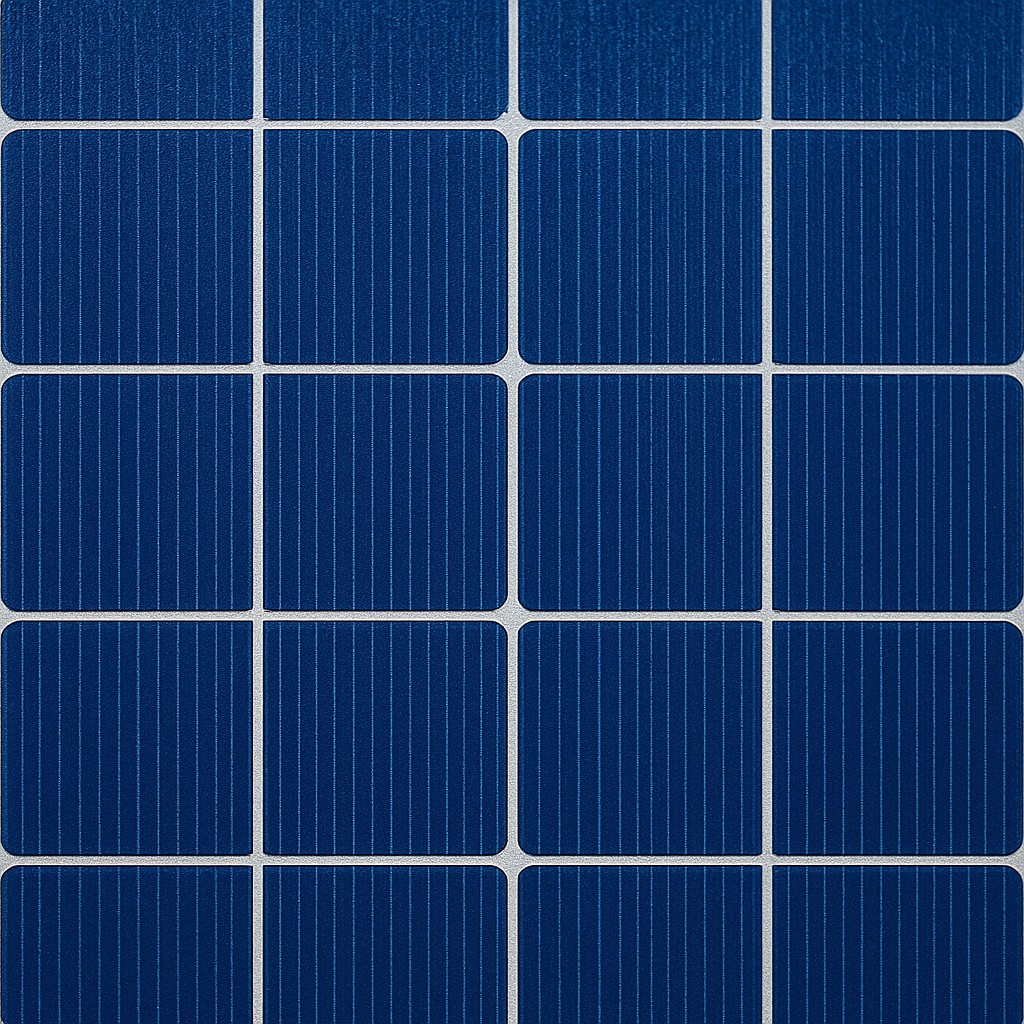 A monocrystalline silicon cell converts sunlight directly into direct-current electricity at up to 23% efficiency.
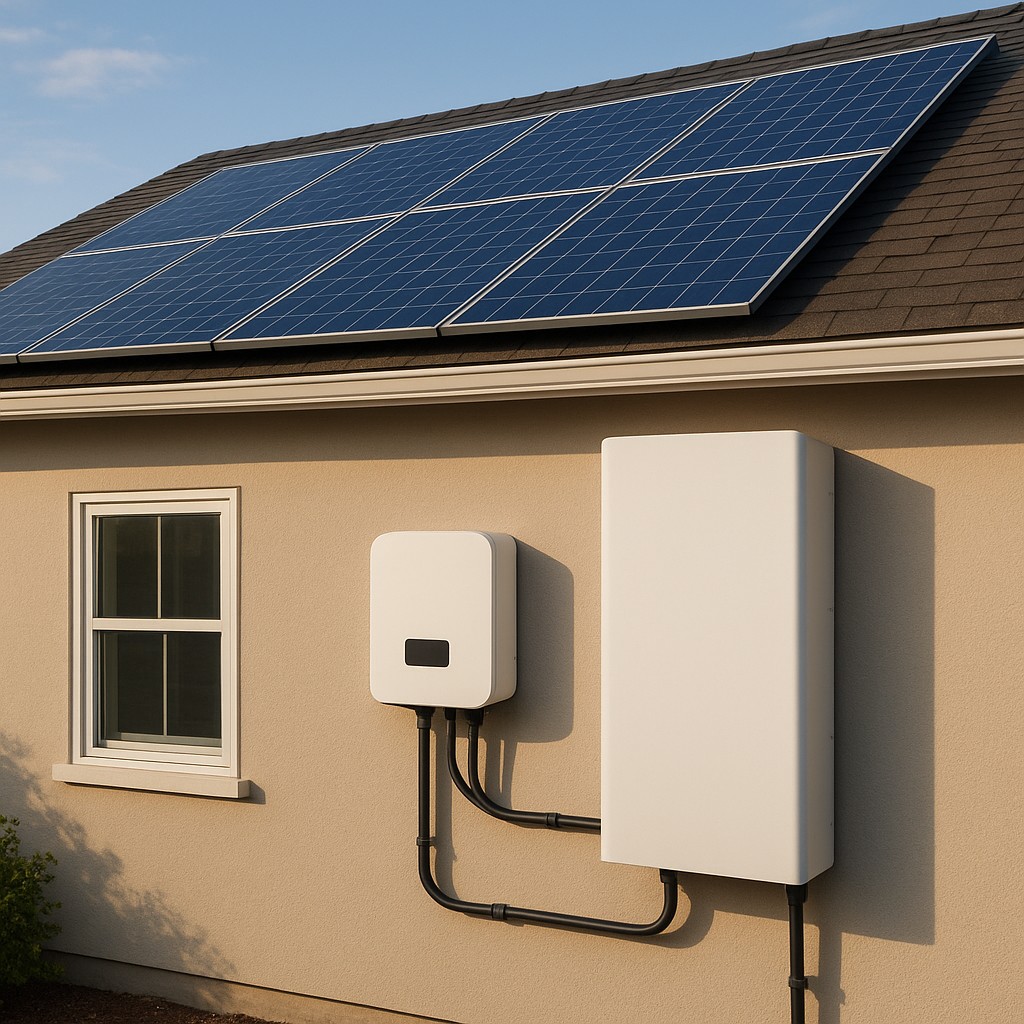 A lithium battery storage unit like this one keeps your miners running after sunset without drawing from the grid.
Battery Storage
Solar panels only produce power while the sun shines. Battery storage systems bridge the gap between production and consumption.
Lithium iron phosphate (LFP) batteries are the most popular choice for solar miners. They tolerate daily deep cycling, operate safely without active cooling, and last ten or more years with proper management.
The battery capacity you need depends on your miner's power draw and how many hours of non-solar runtime you want. A 10 kWh battery pack, for example, can run a 1,000-watt miner for roughly 8 to 10 hours during nighttime hours.
The Complete System
A full solar mining system combines panels, a charge controller, a battery bank, and an inverter. The charge controller sits between the panels and the battery, preventing overcharge and optimising the charging profile.
Modern all-in-one hybrid inverters integrate the inverter and charge controller in a single unit, which simplifies installation considerably.
The sun delivers roughly 1,000 watts per square meter at peak conditions. A well-oriented 10-panel installation can realistically generate 25 to 40 kWh per day, depending on your location and the season.
Ready to Put the Sun to Work?
Find out how solar electricity becomes a competitive edge for crypto miners on the next page.
Solar Mining Advantages →